
White Quartz Countertops: A Guide to Color, Veining, and Everyday Use
A white countertop that looks perfect in a catalog may look gray, cream, or too glossy in your kitchen. Three things make the difference: the undertone of the white, the direction of the veining, and the light in your kitchen. This guide walks you through choosing a white quartz countertop, from comparing colors and veining and pairing them with cabinets to understanding care and reviewing a quote.
What Is a White Quartz Countertop and Who Is It For?
White quartz countertops are made primarily of quartz minerals bound with resin. The nonporous surface resists absorption of tea, coffee, and oil. Lemon juice and vinegar can dull marble, while quartz retains its finish.
With proper care and cleaning, quartz is a practical choice for anyone who wants the look of marble with less maintenance.
How to Choose a White Quartz Countertop with Veining
Start with the undertone
Cool whites have a slight gray or blue cast, while off-whites lean cream or beige. As a rule of thumb, choose off-white if your floors, walls, and cabinets have warm tones. Pure white pairs well with gray, charcoal, or cool white cabinets. Color names vary by brand, so make your decision using a sample.
Solid white or veined quartz?
Solid white creates a quiet backdrop and gives a small kitchen a clean look. Coffee drips and hard-water marks tend to stand out on a light, uniform surface. Fine gray veining helps disguise these marks and pairs well with matte gray cabinet fronts or light oak. For bold veining, choose one focal point, such as the island or the backsplash. Using it on both can make the kitchen feel busy.
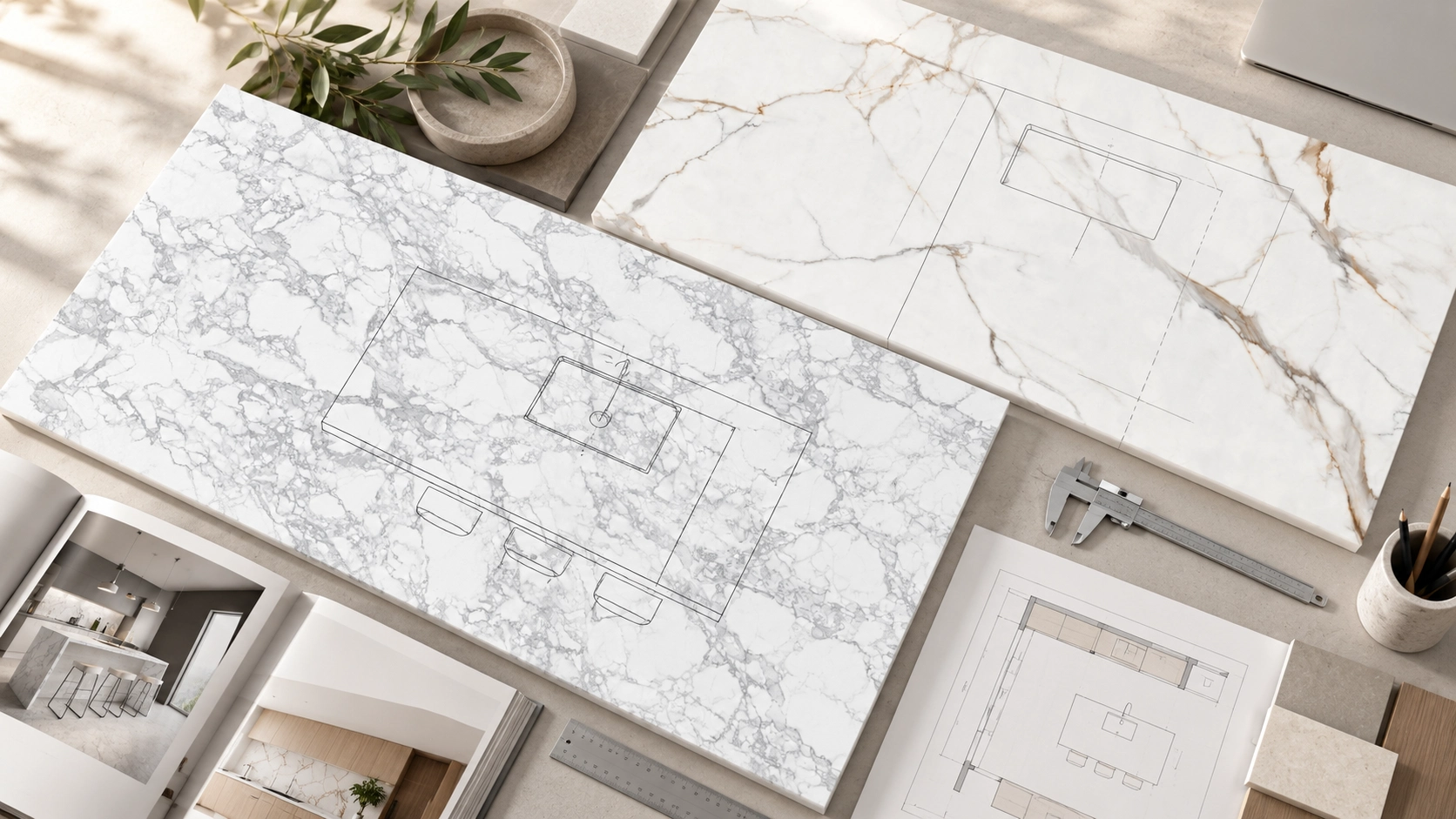
Plan the cuts on a veined slab
You need to see the full slab to understand how the veining runs. Ask your fabricator for a slab layout drawing before fabrication and check the following:
Position the sink and cooktop cutouts so they preserve the most striking vein on the island or at the corner of an L-shaped countertop.
Keep seams away from the corners of sink and cooktop cutouts. These are stress points, so the cutout corners should be rounded.
If the backsplash will come from the same slab, mark its height, outlet locations, and corner returns on the drawing before ordering.
How closely the pattern matches at the seam depends on the product and the cut. Confirm what is possible with your fabricator.
Choosing a White Kitchen Countertop by Cabinet Color
White works with almost any cabinet color, but clashing undertones can be noticeable. A deliberate difference in shade often looks better than two whites that almost match.
Light oak: Choose off-white or a surface with fine gray veining. Oak’s yellow undertone can make a cool white look gray.
Walnut and dark wood: A crisp, pure white creates a strong contrast.
White cabinets: Give the countertop its own shade or finish. Veining or subtle texture softens an all-white look, as do wood shelves and warm-toned metal handles.
Gray, charcoal, and black: White adds brightness and contrast. Bold veining makes a strong graphic statement with black cabinets. In a small kitchen, use subtler veining.
Sage green and navy: Warm white pairs well with sage green, while a more neutral white suits navy. Cabinet hardware, flooring, and wall color also affect the result.
How Lighting, Room Size, and Surface Finish Affect Your Choice
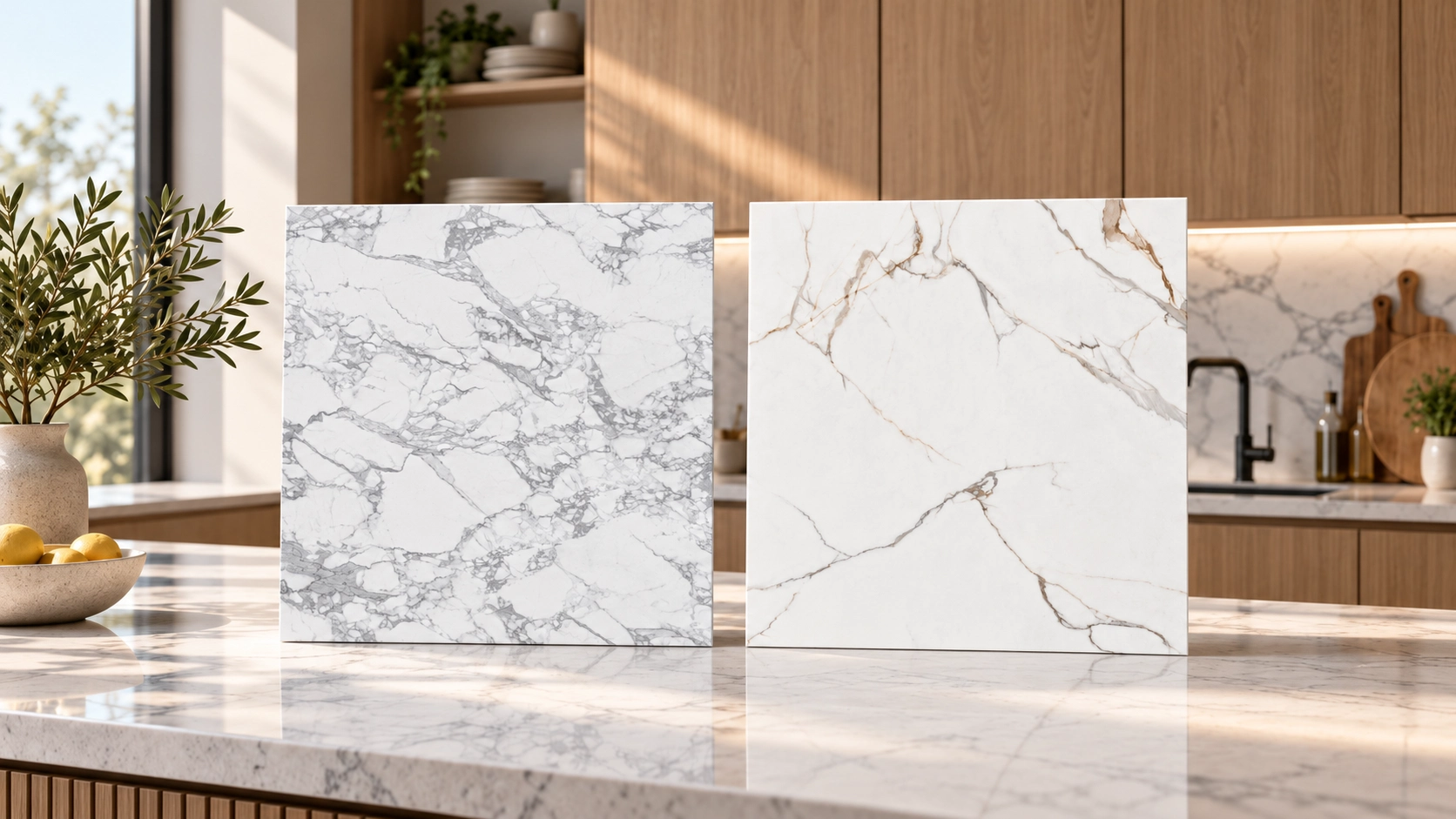
The same white can look cooler in a north-facing kitchen and creamier under warm LEDs. Compare samples in your kitchen before choosing a countertop.
In a small kitchen, fine, low-contrast veining creates a more continuous look. On a large island, bold veining can become a design feature. A polished finish reflects light and makes fingerprints and water marks more visible. Matte or textured finishes look softer. Use a physical sample to choose the finish.
Do White Countertops Stain? Everyday Use and Care
Quartz is nonporous, so tea, coffee, and tomato paste typically stay on the surface. Dried residue can leave marks, so wipe up spills promptly.
Daily cleaning: Use a soft, damp cloth and a manufacturer-approved, pH-neutral cleaner. Avoid scraping dried residue with a knife.
Limescale around the faucet: Dry the area after cleaning.
Heat: Use a trivet for hot cookware.
Cutting: Use a cutting board to protect the surface.
Products to avoid: Keep steel wool, abrasive creams and powders, paint thinner, paint stripper, drain cleaners, strong acids, sealers, and polishing products off the surface.
For more detailed advice, see Coante’s care and use guide.
Checklist Before Buying and Installing
Sample and full slab: A small sample shows the color. To see the full veining pattern, look at a photo of the full slab or, if possible, inspect the slab in person.
When to measure: Take measurements after the cabinets have been installed and leveled. Choose the sink and cooktop models before measuring.
Thickness and edge profile: Quartz countertops typically come in 1.5 cm, 2 cm, and 3 cm thicknesses. Confirm the options for your chosen product.
Seams: Approve seam locations, vein alignment, and handling arrangements before fabrication.
Ask for a written quote that includes:
Manufacturer, collection, model code, and surface finish
Dimensions, thickness, edge profile, and what the backsplash work includes
Sink and cooktop cutouts, seam locations, and installation conditions
Delivery, care instructions, and applicable warranty terms
Warranty terms may vary by product and installation. Check Coante’s warranty information for details.
Choosing a White Surface with Coante
Color, veining, and surface finish vary across Coante collections and models. Decide which undertone, level of veining, and application you want. Then take your shortlist to a nearby location you find through Coante’s sales network, ask for samples, and confirm the product code.
Frequently Asked Questions
Do white quartz countertops yellow over time?
Yellowing is unlikely under normal indoor use. Quartz surfaces contain resin, so prolonged exposure to direct sunlight or outdoor conditions can change their color over time. Check the product’s technical specifications for these applications.
White quartz or white marble countertops?
Choose quartz if stain resistance and easy maintenance are priorities. Marble is a porous natural stone that can lose its shine when exposed to acids such as lemon juice or vinegar. It is more heat-resistant than quartz, and every slab is unique. If you like the way a surface changes with age, consider marble. If you prefer a more consistent appearance over time, choose quartz.
Will seams show on a white veined countertop?
Even a thin seam is usually visible on a light surface. Seams are least noticeable on solid or finely veined surfaces and more apparent when bold veins do not align. Ask your fabricator to place seams in the least conspicuous spots, away from sink and cooktop corners, and approve the layout drawing before installation.
What white countertop goes with wood cabinets?
Off-white or fine gray veining is a good starting point for light oak. Pure white with bold veining works well with dark walnut. Compare the countertop and wood samples side by side in the same light before deciding.
Find the Right White for Your Kitchen
Shortlist two or three options, look at the samples in your kitchen, and approve the slab layout drawing. For help with product selection and installation details, contact a location through Coante’s sales network.