
Are Quartz Countertops Really Resistant to Heat and Scratches?
Short answer: Quartz countertops offer excellent resistance to scratches and stains in everyday use, but care is needed when they are exposed to sudden or intense heat. Two simple habits can help preserve your countertop’s beautiful original texture and shine for years to come:
● Use a cutting board when preparing food.
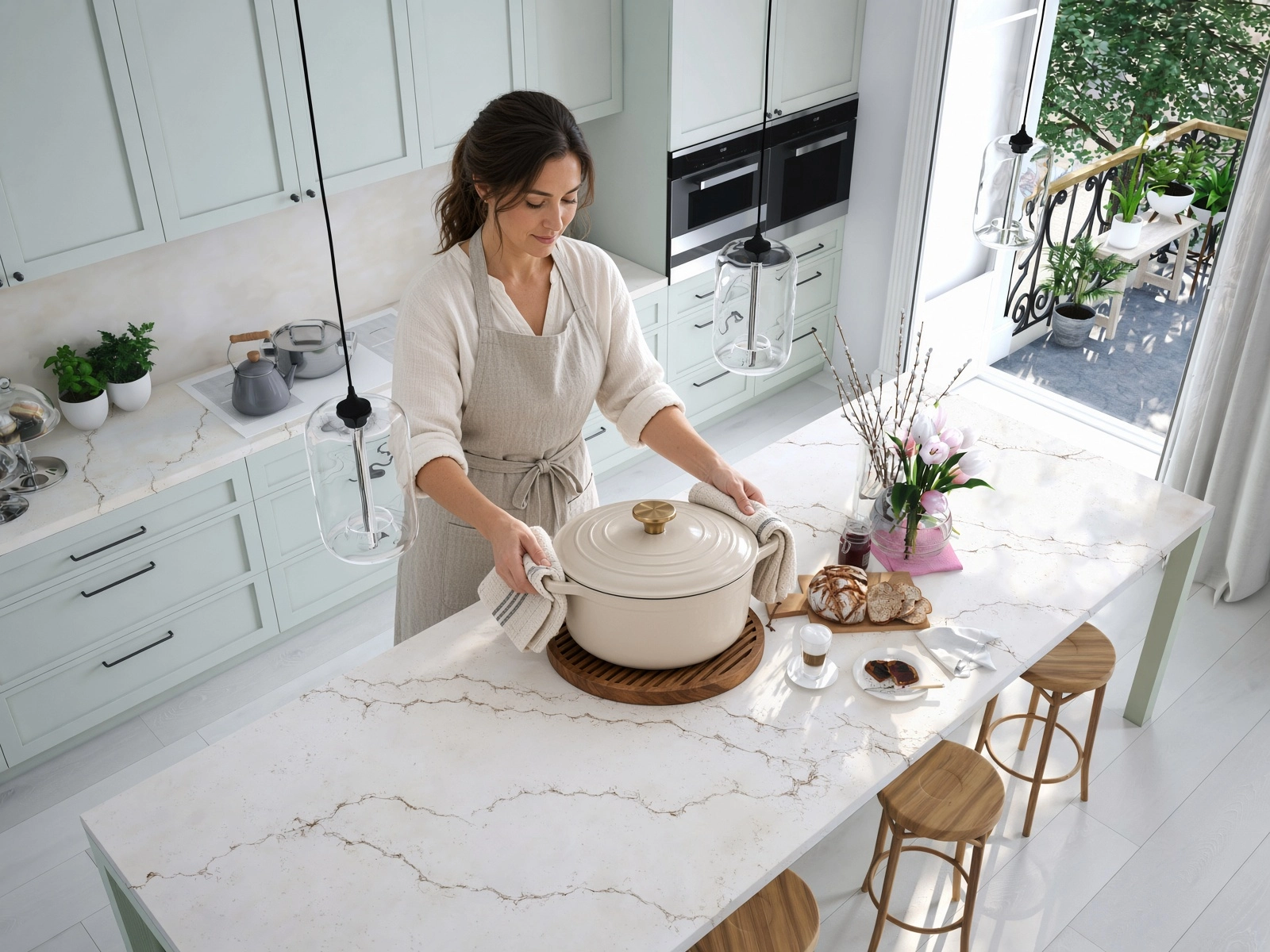
● Place trivets beneath hot pots, baking trays and pans.
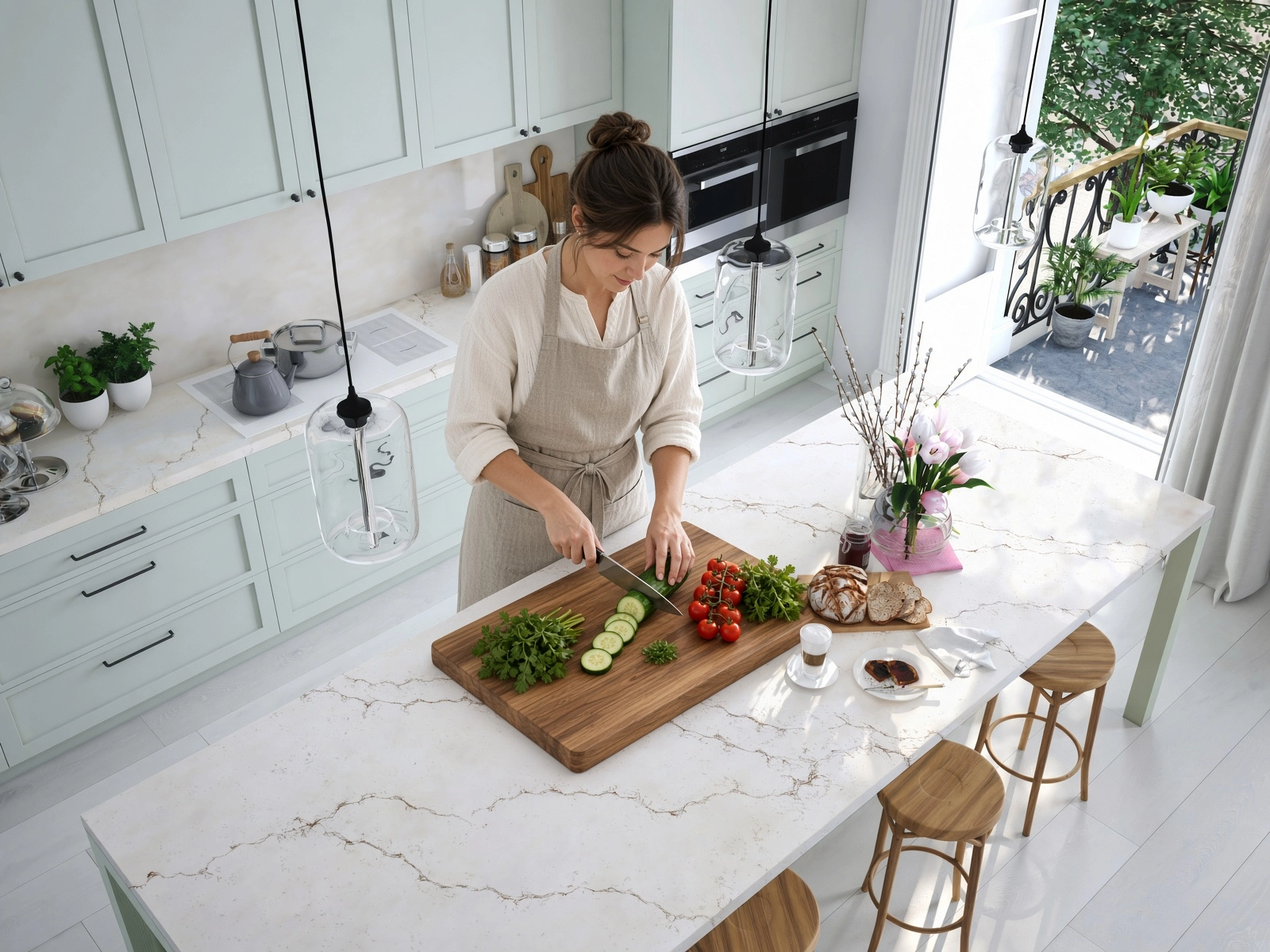
These two habits help protect the surface over time. However, “durable” does not mean the surface can never be scratched or stained. With proper care and everyday habits, quartz can be one of the most dependable surface choices for many years of use.
Beyond covering a large area, the kitchen countertop is one of the most heavily used surfaces in the home. When choosing quartz, it is therefore worth asking not only “Which color looks best?” but also “Will this surface suit the way I use my kitchen?” This guide explores and compares quartz countertop performance in terms of scratches, stains and heat.
What Determines Quartz Countertop Durability?
Quartz is a durable engineered surface material produced by combining natural quartz minerals with resins and color pigments. The proportions and manufacturing processes can vary by product and collection. This controlled production process gives quartz surfaces a nonporous, hygienic and consistent structure.
This manufacturing process is a key factor distinguishing quartz countertops from natural stones such as granite and marble:
● In natural stone, porosity, veining and surface characteristics can vary from one slab or block to another.
● Controlled manufacturing helps quartz countertops deliver more consistent surface performance within the same product series. Consult the product’s technical documentation for exact performance values.
Do Quartz Countertops Scratch?
Short answer: Quartz countertops are highly scratch-resistant. With appropriate everyday habits, the risk of noticeable scratches during normal kitchen use is relatively low.
However, no surface is completely scratch-proof. Understanding the factors behind quartz’s performance can help you enjoy your kitchen surface for years. What should you know?
Natural quartz is a hard mineral. However, a countertop’s scratch resistance depends not only on the quartz crystals but also on maintenance, how the surface is used and its finish. For this reason:
● Normal daily use generally does not cause noticeable scratches on quartz surfaces, although metal objects may leave scuff marks on certain finishes.
● Ceramic knives, hard-tipped tools and abrasive cleaning products can cause fine scratches or dull the surface.
● Cutting directly on the countertop may leave marks over time and can also dull the knife blade. Using a cutting board is therefore recommended.
In practice, quartz surfaces offer a high level of scratch resistance.
Do Quartz Countertops Stain?
Short answer: Thanks to their nonporous structure, quartz countertops are highly stain-resistant. However, the type of substance and how long it remains on the surface matter.
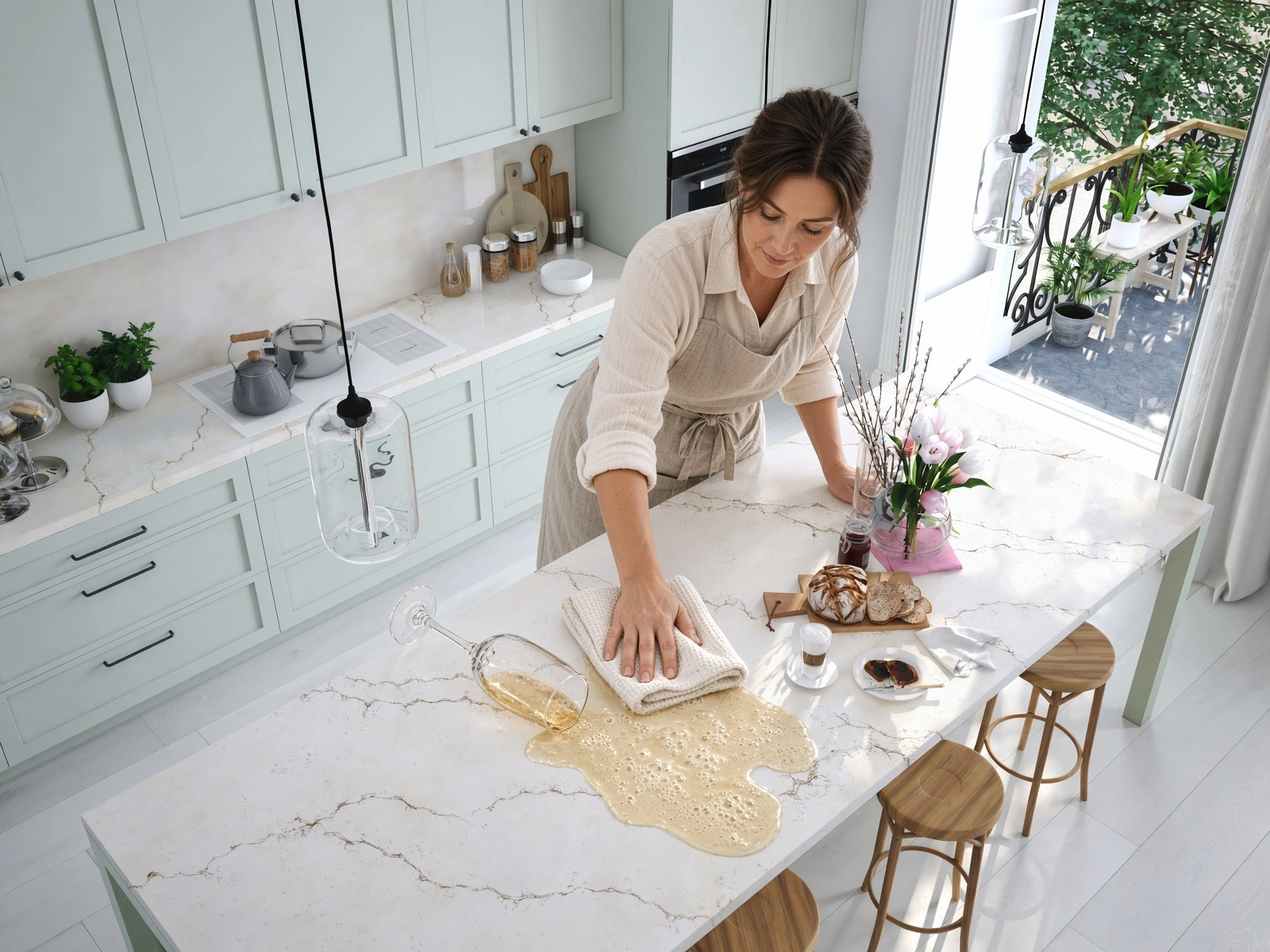
The nonporous surface limits liquid absorption and makes stains easier to clean. Some natural stones, such as marble, may be more porous and more vulnerable to colored or acidic liquids if protective treatment has not been applied.
Nevertheless, there are a few situations to keep in mind:
● Highly pigmented substances such as red wine, coffee, turmeric and fruit juice can leave marks if left on the surface for too long. As with any surface, spills should be cleaned promptly, before they dry or set. Avoiding spills that remain for hours or days makes cleaning much easier.
● Acetone, paint thinners and strong cleaning agents may cause dullness or discoloration. To protect the surface, avoid exposing the countertop to these aggressive chemicals.
● Cosmetics and personal care products: Outside the kitchen, such as on bathroom countertops, heavily pigmented makeup or personal care products should be wiped away promptly with a damp cloth, in accordance with the surface care instructions.
In summary, quartz countertops offer high stain resistance, but they should not be considered completely stain-proof. Regular cleaning and prompt attention to spills help maintain the surface’s appearance.
For proper cleaning methods and frequency, see our quartz countertop care and cleaning tips.
Are Quartz Countertops Heat-Resistant? Can You Put Hot Pans on Them?
Short answer: Quartz surfaces withstand the heat associated with normal kitchen use, but very hot cookware should not be placed directly on them.
The reason is not the quartz mineral itself, but the resin binder used in the surface:
● Although natural quartz minerals can withstand high temperatures, countertop performance must be assessed in relation to all the components of the finished surface.
● Sudden exposure to intense heat can cause discoloration, dullness or surface damage to binding materials. Check the product’s technical documentation.
● Direct contact with items such as a baking tray straight from the oven or a very hot pan can increase the risk of surface damage caused by abrupt temperature changes.
Therefore, always use a heat-resistant trivet or mat beneath hot pots, pans and ovenware. This does not mean quartz lacks heat resistance; the goal is to minimize the effects of sudden, intense heat.
Are Quartz Countertops Porous?
Short answer: Quartz countertops have a nonporous surface structure.
The nonporous surface produced through controlled manufacturing limits liquid absorption. This provides two important benefits:
● Easy to clean: Low liquid absorption makes daily cleaning easier. Nevertheless, the surface should still be cleaned regularly to maintain hygiene.
● No periodic sealing required: Certain natural stone surfaces may need periodic sealing to reduce liquid absorption and the risk of staining. Quartz surfaces generally do not require this treatment.
This is one of the main reasons quartz combines stain resistance with low maintenance requirements.
How Do You Choose the Right Quartz Surface with Coante?
The Coante product catalog allows you to compare different collections, thickness options, and polished and matte finishes. A busy family kitchen, a frequently used kitchen island and a professional kitchen have different priorities. When exploring products, consider not only color but also thickness, surface texture and recommended applications. As technical performance may vary by collection, consult the relevant product documents.
To narrow down your preferred colors and patterns, explore our quartz countertop color selection guide. For a broader comparison of materials, see our kitchen countertop selection guide.
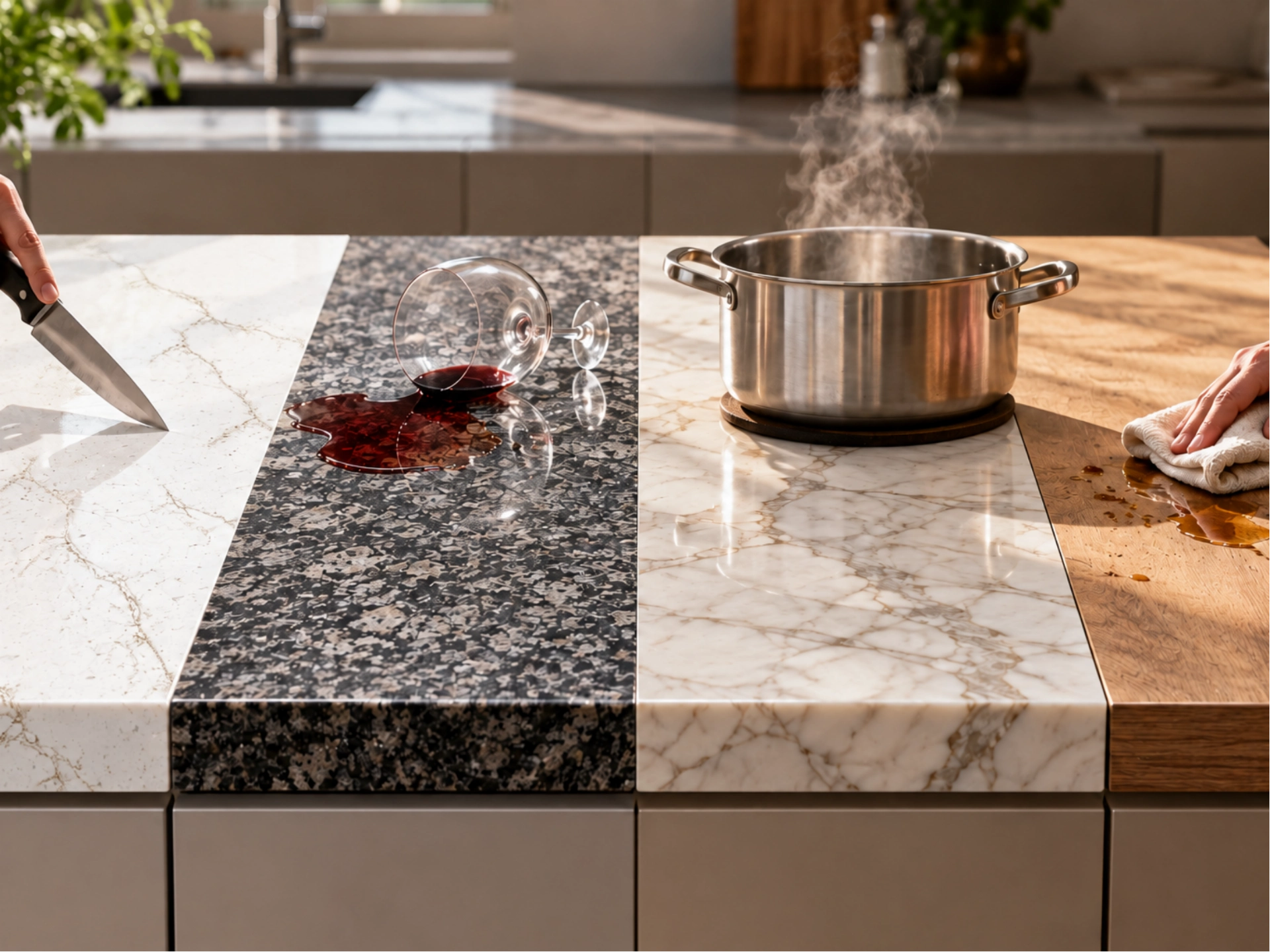
5 Simple Checks Before Buying
● Examine shortlisted surfaces using physical samples, not just photographs.
● Consider everyday conditions in heavily used areas, such as kitchen islands and around the cooktop.
● Think about how you handle hot pots and pans, and make using a trivet part of your daily routine.
● Learn in advance how quickly and how best to clean common spills such as red wine and coffee. Thanks to their nonporous structure, quartz surfaces can be cleaned hygienically in seconds with a damp cloth.
● Before making your final decision, visit a local Coante point of sale to see the surface in a full-slab format.
Tip: Colors and finishes can look different on screen depending on the device and lighting. Visit your nearest Coante point of sale to compare your shortlisted surfaces in person, touch the samples and see how they reflect light.
Frequently Asked Questions
Can a stain on a quartz countertop become permanent?
Quartz surfaces are highly stain-resistant, but strongly pigmented substances, hard-water deposits or unsuitable chemicals can leave marks. If discoloration appears, follow the product’s care instructions and avoid abrasive cleaners.
Are quartz countertops more scratch-resistant than marble?
In general, quartz surfaces offer greater resistance to everyday scratches than marble. Actual performance can still vary depending on how the surface is used.
Can you put any hot cookware on quartz countertops?
Quartz countertops are quite resistant to moderate temperatures encountered in normal kitchen use. However, baking trays straight from the oven and boiling-hot pots removed from the stove can reach extremely high temperatures.
To help preserve your countertop’s original texture, shine and vibrant color for years, we recommend using an attractive trivet beneath hot cookware. This simple habit helps protect the surface from sudden thermal shock and keeps your kitchen looking beautiful over time.
Does quartz countertop durability vary by color or collection?
Yes. Performance can vary by collection and product series. As resin content and manufacturing quality may differ between product families, consult the product’s technical documentation for heat and impact resistance before making a decision. Collection-specific technical information is available in the Coante product catalog.
Conclusion
If you have a busy kitchen, a household with children or want a low-maintenance surface, quartz is a well-balanced option thanks to its scratch resistance, stain resistance and ease of cleaning. Using trivets beneath very hot cookware and cleaning up spills promptly help protect the surface for longer and make everyday maintenance easier.
Once you have established your durability requirements, visit our quartz countertop color selection guide to decide on colors and patterns, or explore the Coante products page to discover the available options.