
Quartz or Marble Countertops? Which Offers More Benefits for a Kitchen?
When choosing a kitchen countertop, those seeking both aesthetics and convenience often face two options: quartz and marble. While marble stands out for its natural veining, quartz countertops, with their durable surface, easy cleaning and wide range of designs, are a leading option for modern kitchens.
So, should you choose quartz or marble countertops?
In busy kitchens, quartz countertops offer significant benefits through their low porosity, suitability for food contact, practical maintenance and designs that adapt to different decorating styles. Marble-look quartz surfaces combine the aesthetic appeal of natural stone with easy care.
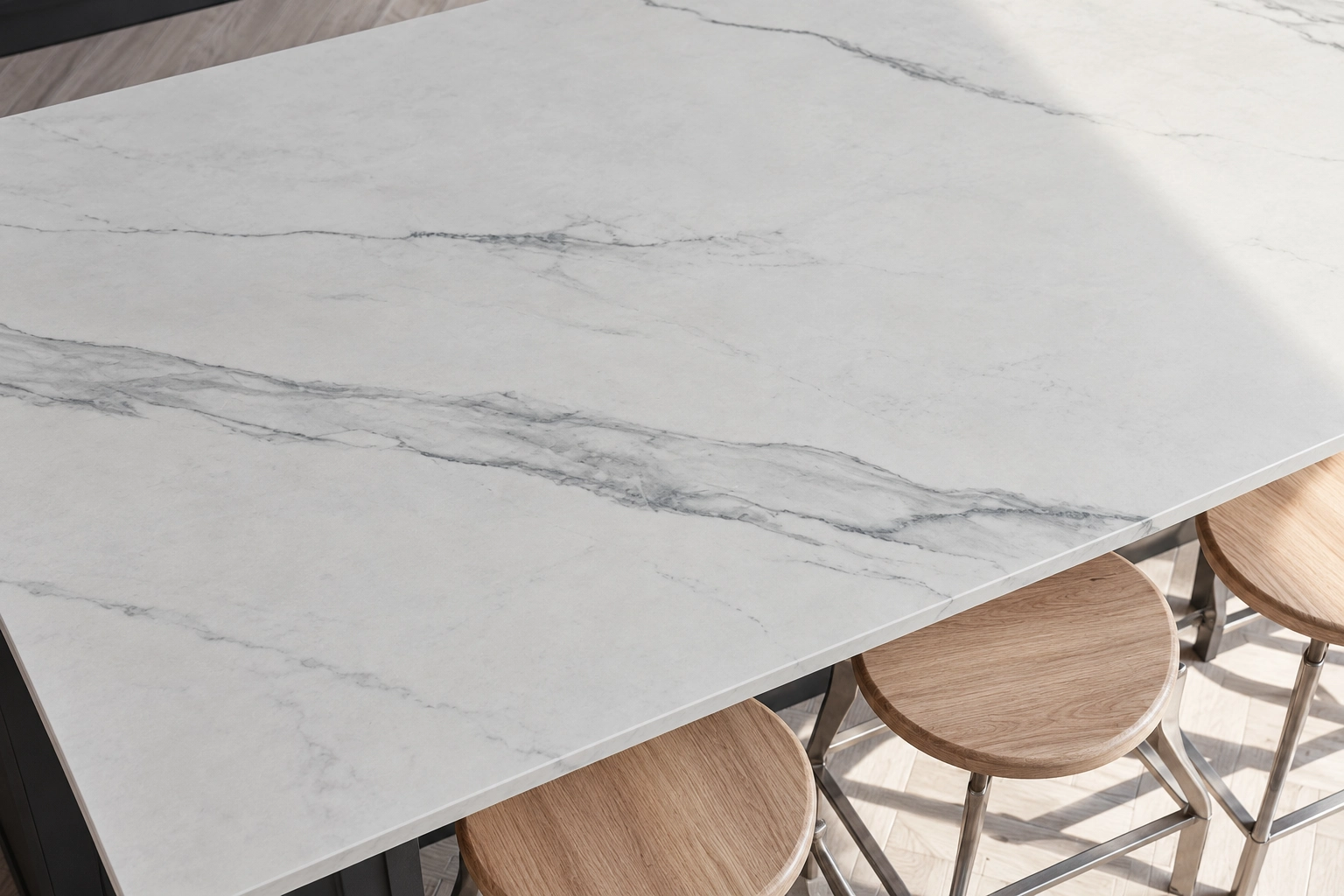
What Is a Quartz Countertop and Why Is It Chosen for Kitchens?
A quartz countertop is an engineered surface made by combining natural quartz mineral with binding components through specialised production processes. Modern manufacturing technologies allow veining inspired by nature and natural stone to be created in a variety of surface options.
Key features of quartz countertops
Non-porous surface structure: Makes everyday cleaning and maintaining hygiene easier.
High surface durability: Provides resistance to many mechanical effects encountered in normal kitchen use.
Easy maintenance: Generally requires no protective sealing treatment.
Design variety: Offers marble and natural stone looks, distinctive nature-inspired patterns, rich colour options and different veining structures.
Long-term use: Can be used for many years with proper installation and care.
Architectural compatibility: Can be adapted to modern, classic and minimalist kitchens.
Structural differences between quartz countertops and natural marble
Marble is a distinctive natural stone formed over millions of years, whereas quartz surfaces are engineered products that combine aesthetics and durability through advanced manufacturing technologies. Their non-porous structure provides high resistance to liquid absorption and staining. Together with scratch resistance, hygienic use and easy care, these properties make quartz surfaces particularly attractive for kitchens.
Natural marble, by contrast, may require more careful use and regular maintenance because of its porosity and sensitivity to acids. Quartz surfaces also meet different design expectations through a rich choice of nature-inspired colours and patterns.
Quartz or Marble Countertops? Everyday Benefits of Quartz
Kitchen countertops are used intensively during food preparation, serving and cleaning. Usage habits therefore matter as much as appearance when selecting a material.
Why are quartz countertops more practical to clean?
The low porosity of quartz countertops makes daily cleaning easier. For most routine cleaning, a soft cloth and water are sufficient. Natural marble requires more care when choosing cleaning products because of its sensitivity to acids.
Are quartz countertops suitable for busy kitchens?
Quartz countertops are a strong option for kitchens that see intensive daily use. Their hard surface offers advantages under normal conditions. However, do not cut directly on the surface, and protective trivets are recommended for very hot equipment.
Do quartz countertops have different care needs from marble?
Quartz countertops generally do not require periodic surface sealing treatments. Natural marble may need protective maintenance depending on the stone and conditions of use. Remember that quartz also requires appropriate cleaning and careful use.
Natural Stone Aesthetics with Marble-Look Quartz Countertops
For users who love marble’s natural veining but want a more practical kitchen surface, marble-look quartz countertops are an important alternative. Advanced quartz manufacturing technologies allow vein movement and colour transitions inspired by natural marble to be created.
Design benefits of marble-look quartz
Quartz countertops with fine grey veining can create an elegant look in light-coloured kitchens. Those seeking a bolder design may prefer surfaces with pronounced vein movement. The variety offered by quartz makes it easier to plan the countertop’s visual role in the kitchen.
Creating a cohesive kitchen island with quartz
On large kitchen islands, marble-look quartz can become the focal point of the design. Vein direction, slab dimensions, joint locations and edge design should be considered together. Vein matching is particularly important for visual continuity in waterfall installations.
Different design options with Coante quartz collections
Coante offers broad design variety by combining three different quartz production technologies on the same manufacturing campus. The Essence, Arteo, Krearte and Lumina collections include surface options for different architectural expectations.
To explore product options, consult the Coante countertop models and collection options guide.
Which Technical Properties Should You Check When Choosing a Quartz Countertop?
Alongside colour and pattern, assess slab dimensions, thickness, surface finish and installation conditions when selecting a quartz countertop.
Quartz countertop thickness and slab dimensions
Different quartz products may be available in various thicknesses and slab sizes. Slab dimensions and the cutting plan are especially important for large kitchen islands. Support structures and cantilever overhangs must meet the manufacturer’s installation criteria.
Sink and hob installations in quartz countertops
Sink and hob cut-outs require accurate dimensions and professional fabrication. Appropriate corner radii, necessary supports and manufacturer-specified clearances must be considered.
Quartz countertop finishes and edge design
Polished, matt and differently textured surfaces can create different visual effects in a kitchen. The edge profile affects the perceived thickness and design character of the countertop. Review the care requirements of the selected surface and, where possible, inspect a physical sample.
Which Kitchen Designs Benefit from Quartz Countertops?
One of the main benefits of quartz countertops is their wide range of designs, which can be adapted to different decorating styles.
Quartz countertops in modern and minimalist kitchens
Modern kitchens emphasise simple lines and balanced surface designs. Light-toned quartz countertops or those with restrained veining can create a cohesive look with contemporary cabinetry.
Marble-look quartz in classic kitchens
The look of natural stone is an important design element in classic kitchens. Marble-look quartz countertops can help combine this aesthetic with easy daily care.
Using quartz countertops in small kitchens
In small kitchens, light-coloured quartz surfaces can create a more spacious atmosphere when paired with suitable lighting and cabinetry. For colour and pattern choices, consult the kitchen selection guide to quartz countertop colours for guidance.
Long-Term Benefits of Quartz Countertops
Choosing a kitchen countertop is a long-term decision. Ease of use, maintenance needs and installation quality therefore matter as much as the initial appearance.
Is a quartz countertop a long-lasting investment?
A quality quartz countertop can be used for many years with proper installation and care. Its service life depends on the product’s technical properties, workmanship and daily habits.
What affects the cost of a quartz countertop?
The selected collection, slab size, thickness, surface finish, cutting details and installation requirements affect the total cost. Vein continuity and slab layout can change material needs, especially on large kitchen islands.
What should you check before buying a quartz countertop?
1. Determine how intensively the kitchen will be used.
2. Examine quartz surface samples.
3. Assess the appearance of the full slab.
4. Learn about technical properties and care requirements.
5. Clarify cutting and installation details.
6. Check the warranty terms.
Quartz or Marble Countertops? What Should Guide Your Decision?
Quartz countertops stand out in projects where easy care, design variety and intensive kitchen use are priorities. Natural marble may be considered where a unique stone character is paramount and its maintenance requirements are accepted.
Who are quartz countertops better suited to?
Those who love the marble look but want easy care.
Families who use their kitchen countertops intensively.
Those seeking a modern, cohesive design.
Those looking for different colours and veining options.
Those wanting a strong visual impact on a large kitchen island.
Those wanting a hygienic product suitable for food contact.
The approach offered by Coante quartz surfaces
Coante’s use of three different quartz production technologies on the same campus enables it to develop surface options for different design expectations. Collection features, technical documents and installation requirements should be considered together during product selection.
Conclusion: Quartz Countertops for Kitchen Aesthetics and Convenience
Quartz countertops, with their non-porous structure and food-contact-suitable surface, stand out as a strong choice for modern kitchens through easy care, varied vein designs and architectural application options.
For users who love marble’s elegant appearance but seek a more practical surface, marble-look quartz offers a balanced combination of aesthetics and functionality.
Coante offers quartz surface options for different kitchen designs through its Essence, Arteo, Krearte and Lumina collections.
Explore Coante collections and seek support from authorised dealers to discover a quartz countertop suited to your kitchen.