
Quartz Kitchen Islands: A Design Guide from Dimensions to Waterfall Edges
An island that draws every eye in the kitchen can narrow walkways, make seating impractical or introduce unnecessary seams in the quartz surface if poorly planned. A successful quartz kitchen island starts with resolving circulation, use, support structure and pattern direction together, before choosing an attractive slab. Quartz's non-porous, easy-to-clean structure is a particular advantage for islands used for food preparation and serving.
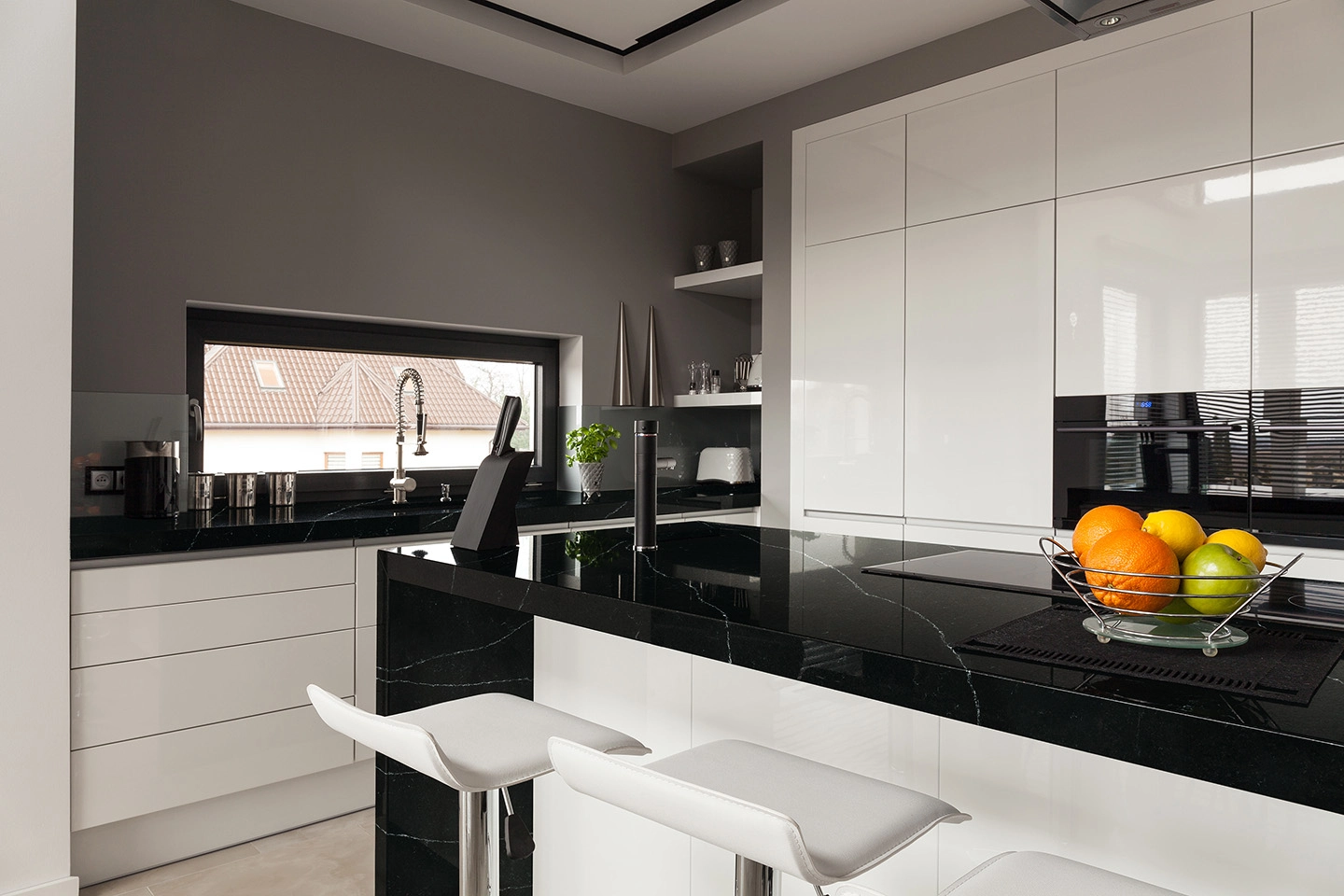
Where Should Quartz Kitchen Island Design Begin?
The first decision in designing a quartz kitchen island is its function, not its colour. Which preparation, serving, seating and cooking functions will share the space determines the island's size, service requirements and countertop support. Following this sequence helps reduce costly alterations later.
Define how the island will be used every day
Decide what the island will mainly be used for. Will it be for breakfast, preparing meals as a family or entertaining guests? Placing seating beside a hot cooking area requires separate consideration of splashes and safety. If a sink is planned, resolve the water connection, waste pipe gradient and cabinet interior layout at the design stage.
Measure circulation and workspace around the island
Measure clear passage widths, allowing for open cabinet doors, the dishwasher and space to pull out stools. In a kitchen where two people will work at once, measuring only from wall to island is not enough; also consider the situation where opposing doors are open. In example layouts, a range of 100–110 cm can serve as an initial check, but accessibility, user numbers and kitchen equipment dimensions determine the final decision.
Dimensions and Slab Planning for Kitchen Island Countertops
How can a large kitchen island retain a single-piece appearance?
For a large kitchen island countertop, first confirm the actual slab dimensions and usable cutting area of the selected Coante product. Catalogue dimensions may differ from the net size after cutting. Vein direction, edge finishing and hob or sink openings can change the plan. If a single-piece appearance is desired, tell the installer before the site survey.
Position joints according to the user's viewing angle
If a joint is unavoidable, consider more than material waste. Review the most visible side, lighting direction and the point where veins meet together. Do not assume patterns on different slabs will be completely continuous. Approve the cutting diagram over photographs of the actual slabs to be used.
How are quartz countertop thickness and the cabinet overhang determined?
The seating overhang matters for stool use and knee clearance. However, the distance a quartz countertop can extend without additional support may vary by installation. Slab thickness, base cabinet depth, cut-outs such as sinks or hobs and the loads the countertop may carry must be assessed by the installer to determine whether concealed steel supports, brackets or legs are needed. Other manufacturers' installation tables do not automatically apply to Coante.
Design Details When Choosing Large-Format Quartz Surfaces
How does pattern scale relate to island size?
Choosing from a small sample can be misleading for a large island. Bold veins create a strong focal point, while quieter surfaces leave room for lighting and furniture. Rather than repeating colour coordination advice, consult the quartz countertop colour selection guide as a complementary resource.
How does the edge profile change perceived thickness?
Edge options such as a lightly bevelled edge, a mitred edge and a double-thickness edge can change the appearance and perceived thickness of the same surface. Coante's physical properties and edge profiles page shows different solutions. Consider the chosen profile alongside impact risks around the island, the waterfall joint and cabinet design.
How can Coante collections suit the project's design language?
The Essence, Arteo, Krearte and Lumina collections provide a starting point for exploring different design approaches. However, do not assume every product has the same dimensions, thickness or vein continuity. Request the current technical data sheet, slab photograph and supply information together when choosing a model.
Ease of Use, Hygiene and Daily Care
How should preparation and serving zones be separated?
If vegetables will be prepared on one part of the island while coffee is served on another, design sockets, lighting and seating accordingly. Reserve an accessible place for a chopping board and trivet to make daily use easier. Thanks to their non-porous structure, quartz surfaces make it harder for dirt and liquids to penetrate, allowing easy cleaning.
How can the island countertop be kept clean?
Use a damp microfibre cloth for daily cleaning. For stubborn stains, choose a pH-neutral cleaner recommended by Coante. Do not use abrasive scourers, strong chemicals or protective polishes. For care details, consult the Coante care and use guide.
Checks from Ordering to Installation
What information should be ready before the site survey?
Collect the island's length and depth, cabinet layout, floor level, door details, sink or hob models, seating overhang and preferred edge profile in one file. Check the route for bringing large slabs into the home early in particular.
What should be shown for cutting approval?
Request a drawing marking vein direction, joints, waterfall panel matching, cut-outs and visible edges on the actual slab. Sample approval and slab layout approval are separate stages. Written acceptance of the latest revision before production reduces errors.
What should be checked on installation day?
Check base cabinet levels, support connections, joints, corner finishes and silicone details. Ask the installer about adhesive curing time and when the countertop can be used. If large spans or heavy panels require a structural assessment, complete it before installation.
Will veins continue exactly across a waterfall island countertop?
Not always. Visual vein continuity depends on the product pattern, slab layout and cutting plan. Check the match on a photograph of the actual slab before production.
Does a quartz island countertop need support?
It may, depending on overhang length, slab thickness, substructure and nearby openings. A specialist installer must determine the final support solution in accordance with the product's technical requirements.
Can a quartz kitchen island withstand a hot pan?
Although quartz surfaces are designed for everyday kitchen use, placing hot pans directly on them is not recommended. Coante's care instructions require a trivet.
Choose the Right Quartz Island for Your Project with Coante
A successful island countertop is more than a surface that looks good on day one; it is a design with comfortable walkways, a properly planned support system and the surface's natural pattern flow highlighted. When exploring Coante collections, request actual slab dimensions and technical documents.